13 Killed, 20 Injured in Major Road Collision in Egypt
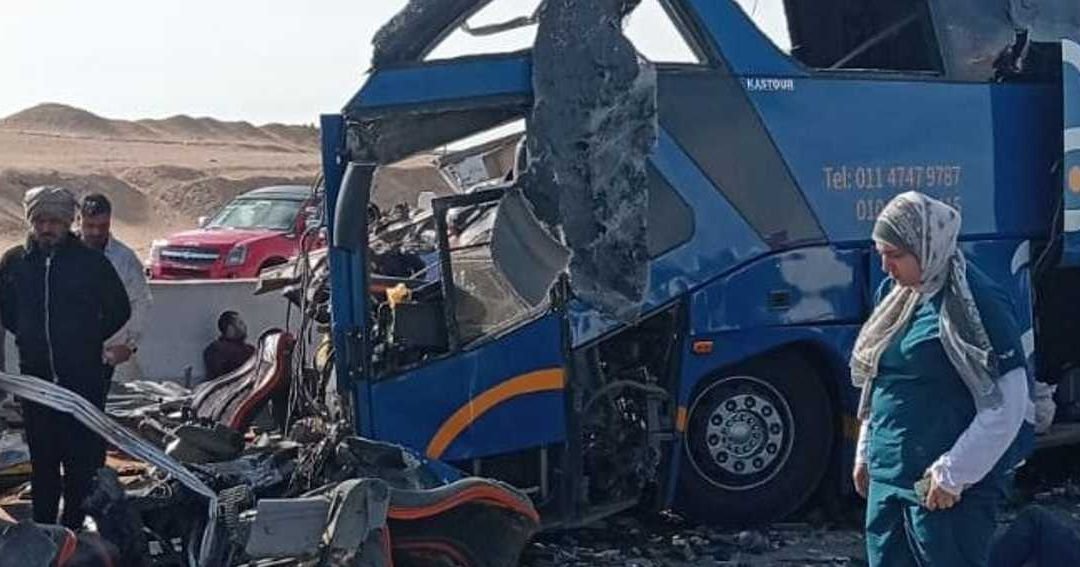
At least 13 people were killed and 20 others injured on Tuesday following a severe collision between a passenger bus and a heavy transport vehicle on the Cairo-Asyut road in Egypt. The incident, which occurred along a major arterial route connecting the capital to the Upper Egypt region, prompted a significant emergency response as local authorities mobilized to manage the scene and provide medical assistance to the survivors.
Emergency services arrived at the site shortly after the crash to transport the injured to nearby medical facilities. While official investigations are currently underway to determine the precise circumstances that led to the collision, the incident underscores ongoing concerns regarding road safety on key Egyptian highways. The Cairo-Asyut route is a vital transportation artery in the country, frequently utilized by commuters, long-haul transport trucks, and travelers moving between the northern and southern provinces of Egypt.
The scale of the casualties has brought renewed attention to the issue of traffic safety and the regulation of heavy transport operations on national roads. For families affected by the tragedy, the event represents a devastating loss, while for local authorities, it highlights the challenges involved in maintaining safety standards across the country’s extensive highway network.
Traffic accidents remain a significant public concern in Egypt, often attributed to a combination of factors including driver conduct, the high volume of heavy cargo vehicles traversing long distances, and the condition of major transit routes. The government has previously implemented various infrastructure development projects aimed at upgrading Egypt’s road network, including the construction of specialized lanes for heavy transport and the expansion of key highways, intended to reduce the frequency of such catastrophic collisions.
As the recovery operations concluded at the accident site, officials focused on clearing the wreckage to restore traffic flow, while the injured continue to receive care in regional hospitals. The incident is currently being treated with urgency by local authorities, who are examining the conditions surrounding the collision to ascertain whether mechanical failure, human error, or other external factors played a role in the disaster.
While the national transport ministry has been engaged in a multi-year effort to modernize transit infrastructure, events such as the Cairo-Asyut collision serve as a stark reminder of the persistent risks faced by citizens traveling across the nation’s primary transit corridors. Further updates regarding the condition of those hospitalized and the progress of the official investigation are expected as the Ministry of Health and local traffic police continue their follow-up assessments.