Damascus Alarmed by Potential Druze Insurgency in Suwayda
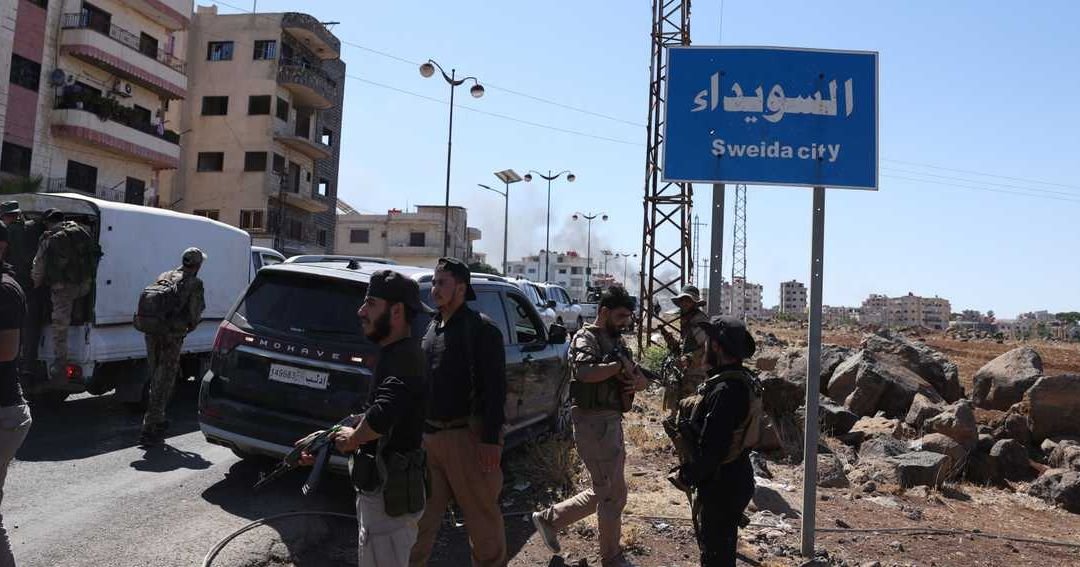
Tensions in southern Syria have reached a critical juncture, with reports emerging from Damascus indicating growing apprehension regarding a potential offensive by armed Druze factions in the Suwayda governorate. Syrian government officials have signaled that they are closely monitoring the region, citing concerns that hostile activities could be launched against state forces within the next few days.
According to high-level Syrian sources, the central government in Damascus is increasingly convinced that these local factions are not acting alone. Syrian officials have leveled direct accusations against Israel, alleging that intelligence and military support is being provided to these groups to destabilize the region and undermine state control in the south. The rhetoric coming from Damascus suggests that the Syrian security establishment views these developments as a significant threat to the status quo in the sensitive border region.
The Suwayda governorate, which has maintained a degree of autonomy and relative distance from the central government’s direct security apparatus throughout the broader Syrian conflict, has recently seen a shift in its security dynamics. Syrian authorities appear particularly sensitive to the possibility that any escalation in this province could serve as a wider catalyst for regional instability, potentially drawing in external actors or exploiting existing vulnerabilities in the Syrian state’s defensive posture.
While the specific tactical capabilities of these armed factions remain a subject of debate, the Syrian government’s formal concerns underscore the precarious nature of the current security landscape in the south. The potential for a coordinated offensive has prompted a heightened state of alert among Syrian military units stationed in the vicinity, as the administration in Damascus prepares for possible confrontations.
Israel has historically maintained a policy of ambiguity regarding its tactical involvement in Syria’s southern border regions, though it has frequently conducted operations against targets it identifies as aligned with Iranian interests or Hezbollah. The Syrian government’s public linking of these local Druze factions to Israeli support indicates an attempt by Damascus to frame the internal instability as a continuation of broader regional tensions and foreign interference.
As the situation develops, the focus remains on the southern frontier, where the interplay between local grievances, central government authority, and regional geopolitical interests continues to shape the trajectory of the security environment. The coming days will be critical in determining whether these fears materialize into a sustained armed conflict or if the localized tensions remain contained within the province, as both state and non-state actors weigh the consequences of a direct escalation.