

Sudan’s Conflict Risks Spilling Over Into Regional Crisis
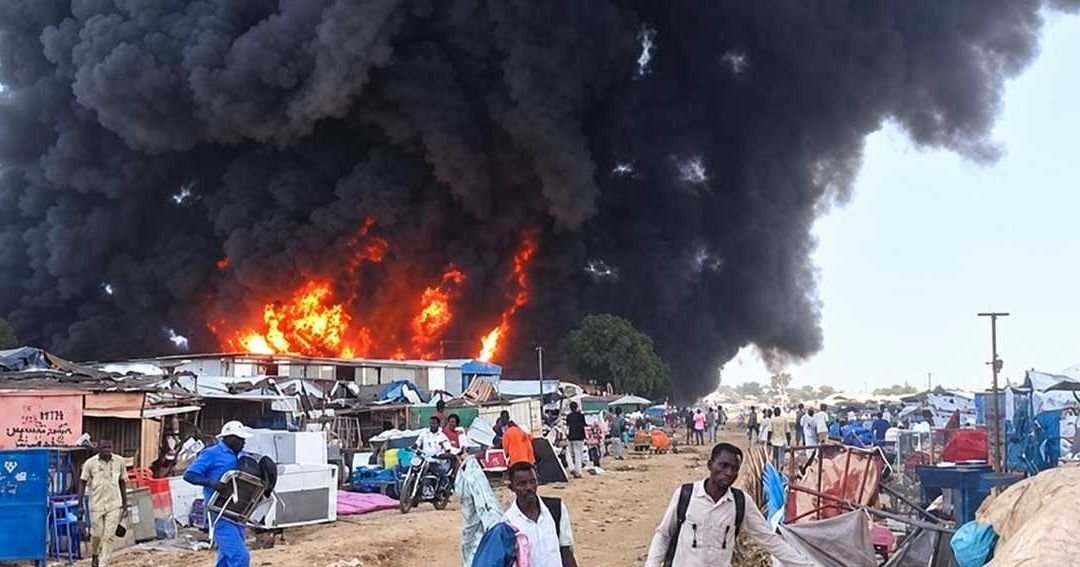
The ongoing war in Sudan, centered on the power struggle between the Sudanese Armed Forces (SAF) and the Rapid Support Forces (RSF), is increasingly spilling beyond the nation’s borders, threatening to destabilize its immediate neighbors and plunge the broader region into a prolonged crisis. What began as a localized struggle for control in Khartoum and other major urban centers has now transformed into a multi-front regional security concern.
Recent developments underscore the volatility of the situation. In the disputed territory of Abyei, situated between Sudan and South Sudan, lethal attacks have claimed numerous lives, heightening friction and raising fears of a renewed escalation in a region already defined by its delicate peace. Simultaneously, previous instances of cross-border incursions into Chadian territory have strained the already tenuous relations between Port Sudan and N’Djamena, adding a layer of international complexity to the humanitarian and security landscape along the border.
Further complicating the regional security architecture, authorities in Ethiopia have leveled serious accusations against the Sudanese military. Addis Ababa alleges that the SAF has provided support to armed coalitions seeking to challenge the stability of the Ethiopian federal government. These claims, regardless of their immediate veracity, highlight a dangerous trend in which the internal Sudanese conflict is being perceived as an engine for regional instability, drawing surrounding states into a proxy dynamic.
Analysts note that the leadership currently operating out of Port Sudan appears to be inadvertently or intentionally pushing the conflict into a neighborhood that was already struggling with fragility. By failing to contain the reach of the fighting, the military authorities are risking a scenario where the war in Sudan becomes an open-ended regional crisis. The current trajectory suggests that the spillover effects—ranging from cross-border military maneuvers to the potential fueling of internal insurgencies in neighboring countries—could alter the security landscape of the Horn of Africa and the Sahel for the foreseeable future.
As the conflict continues to manifest across multiple international boundaries, the humanitarian impact is expected to exacerbate existing regional vulnerabilities. The movement of refugees, the disruption of vital supply chains, and the intensification of local border skirmishes indicate that the repercussions of the Sudanese war are no longer confined to the sovereign territory of the country itself. International observers and regional organizations are increasingly alarmed that unless a comprehensive ceasefire and political resolution are achieved, the internal collapse of the Sudanese state apparatus will continue to exert a destabilizing force on the political and security stability of the entire region.