

Iran President Says Khamenei Authorizes Negotiations with Washington
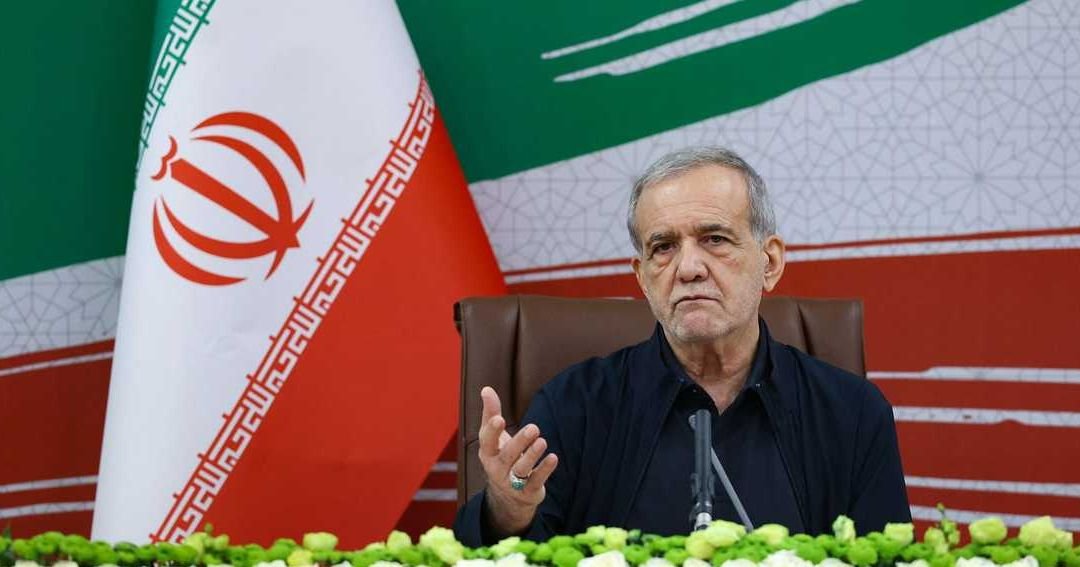
Iranian President Masoud Pezeshkian announced on Monday that Supreme Leader Ali Khamenei has authorized the government to engage in negotiations with the United States. The declaration marks a significant potential shift in the diplomatic landscape between Tehran and Washington, though the president maintained a firm stance regarding the country’s national resilience.
Speaking on the state of Iranian foreign policy, President Pezeshkian underscored that the administration has been granted specific authorities to pursue diplomatic channels with the U.S. government. While he did not elaborate on the specific scope or limitations of these newly granted powers, the public confirmation from the head of the executive branch signals a notable development in the management of Iran’s complex relationship with Washington.
Despite the openness to dialogue, Pezeshkian emphasized that Iran remains steadfast in the face of external pressures. He explicitly warned that the nation’s adversaries would not succeed in compelling Iran to submit through military aggression or coercion. This dual message of diplomatic readiness coupled with a commitment to national sovereignty reflects the ongoing balancing act inherent in Iran’s strategic posture.
The announcement comes amid a period of heightened geopolitical tensions across the Middle East, with various regional actors watching closely for signs of a thaw in Iran-U.S. relations. For years, the prospect of direct negotiations has been a point of contention within Iranian political circles, with the Supreme Leader traditionally holding ultimate authority over foreign policy and strategic security decisions.
By framing the authorization as a move sanctioned by the Supreme Leader, the Iranian presidency seeks to solidify the legitimacy of any future diplomatic engagement, signaling to domestic and international observers that the government is operating within the parameters set by the nation’s highest religious and political authority.
While the prospect of talks represents a potential change in tone, the Iranian leadership has continued to stress that such engagement would not compromise the country’s fundamental principles or its defense capabilities. The administration’s stated focus remains on navigating global challenges while ensuring that the Islamic Republic remains invulnerable to foreign attempts to undermine its domestic stability or regional influence.
International analysts and observers are expected to monitor the situation closely to determine whether this mandate will lead to tangible diplomatic breakthroughs or if it will remain a procedural adjustment in a long-standing standoff. For now, the administration’s focus is on maintaining national strength while exploring the diplomatic flexibility now permitted by the Supreme Leader.