Patriotic Union of Kurdistan Withdraws from Regional Government
The political landscape of the Kurdistan Region of Iraq is facing a period of intense instability following the decision by the Patriotic Union of Kurdistan (PUK) to withdraw from the regional government. This significant move marks a breakdown in the long-standing power-sharing arrangement between the PUK and its primary rival, the Kurdistan Democratic Party (KDP).
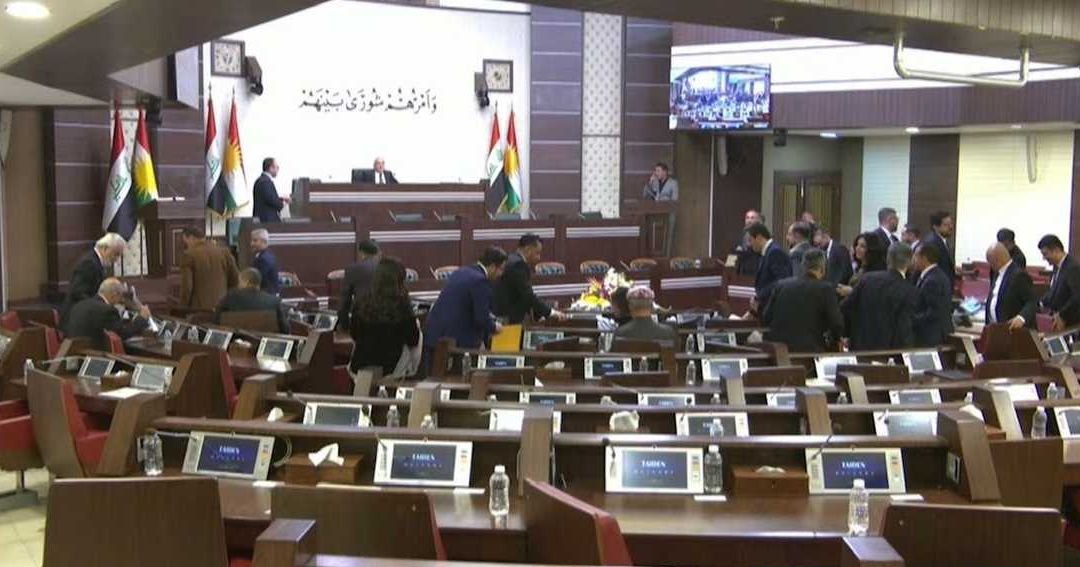
The PUK’s leadership confirmed its formal exit from the government, signaling deep-seated grievances regarding the governance and legislative processes currently underway in Erbil. Central to the dispute is the PUK’s refusal to recognize the legitimacy of a recent parliamentary session held in the regional capital. By challenging the legality of these proceedings, the party has effectively signaled its departure from the collaborative administrative framework that has largely defined the region’s political structure since the fall of the former regime.
This development carries significant implications for the internal unity of the Kurdistan Region. Observers note that the move threatens to revive the specter of a fractured administration, reminiscent of the historical division between the KDP-controlled zone in Erbil and the PUK-dominated territories in Sulaymaniyah. Such a bifurcation would represent a major regression for the region, potentially undermining years of efforts to maintain a cohesive political, economic, and security architecture.
The friction between the two dominant parties has historically oscillated between uneasy cooperation and open confrontation. However, the current withdrawal signals that the political divide has reached a critical threshold. The PUK’s rejection of the parliamentary session in Erbil serves as a direct challenge to the KDP’s leadership and its vision for the region’s legislative direction. By distancing itself from the executive branch, the PUK is positioning itself in opposition to the established status quo, raising questions about the future of ministerial appointments, local governance, and the unified management of regional resources.
The potential for the creation of parallel institutions remains a primary concern for political analysts monitoring the region. Should the PUK proceed with the establishment of separate administrative or governance bodies in its traditional strongholds, the political landscape could become increasingly paralyzed. This would complicate the already complex relations between Erbil and the federal government in Baghdad, as well as influence the regional security dynamics that are critical to the broader stability of northern Iraq. As the situation remains fluid, the international community and domestic stakeholders are watching closely to see if mediation efforts can avert a complete collapse of the regional consensus or if the Kurdistan Region is headed toward a period of prolonged political polarization and administrative fragmentation.