

Rare 18th-Century Quran Manuscript Displayed in Makkah
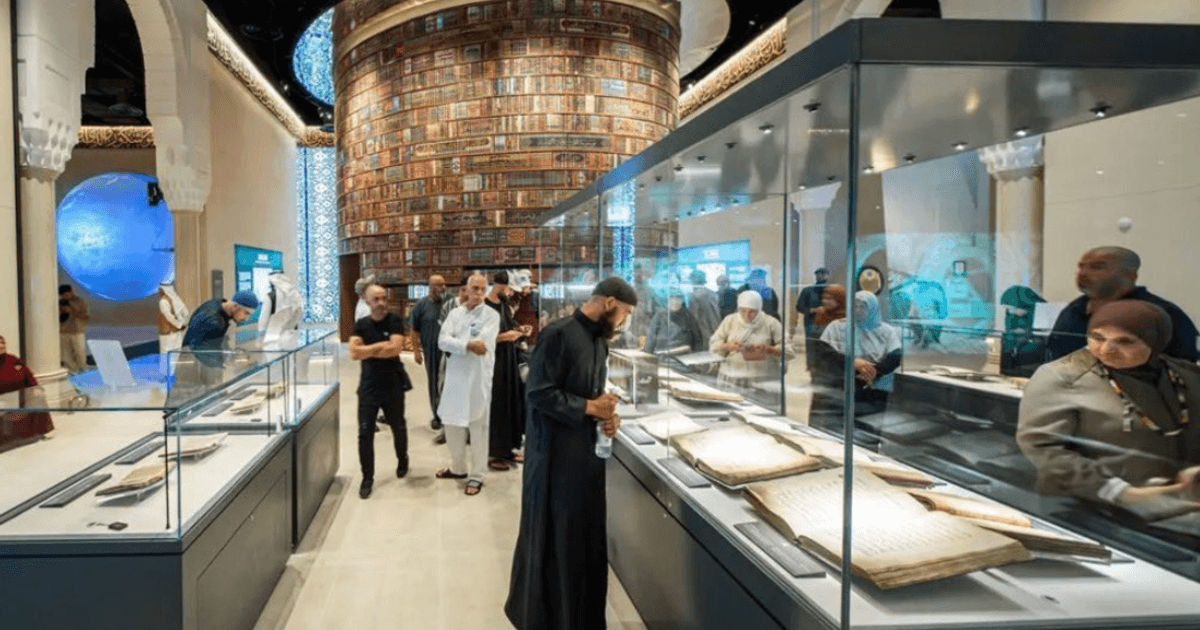
A rare 18th-century manuscript of the Holy Quran is currently the focus of an exhibition at the Quran Museum, located within the Hira Cultural District in the holy city of Makkah, Saudi Arabia. This historical artifact, dating back to the 12th century Hijri, offers visitors a unique window into the sophisticated artistry and theological dedication that defined Islamic book production three centuries ago.
The manuscript serves as a significant example of the evolution of Arabic calligraphy, as it masterfully integrates three of the most renowned and complex scripts: Thuluth, Rayhani, and Naskh. The presence of these three distinct styles within a single volume highlights the technical proficiency of the scribes of the era, who were tasked with preserving the text of the Quran through meticulous hand-copying. Each script requires specific training and stylistic discipline, and their harmonious inclusion reflects the high aesthetic standards maintained during the 18th century.
Beyond the calligraphy, the manuscript is celebrated for its elaborate decorative elements. The pages feature intricate floral motifs and refined gilding, craftsmanship that was characteristic of the period’s luxury manuscript production. These illuminations are not merely ornamental; they were traditionally used to demarcate sections and emphasize the sanctity of the text, showcasing the intersection of visual art and spiritual practice in historical Islamic scholarship.
The Hira Cultural District, situated near the historic Cave of Hira, has become a prominent venue for preserving and displaying such heritage pieces. By exhibiting this rare Quran, the museum aims to highlight the enduring legacy of Islamic calligraphy and the tradition of manuscript illumination. The exhibition provides both researchers and the public with an opportunity to observe the preservation techniques required to maintain such delicate historical materials, while also underscoring Saudi Arabia’s commitment to showcasing its rich Islamic heritage to a global audience.
The display is expected to draw interest from those tracking the development of Middle Eastern art history and the preservation of religious texts. As a cultural site, the Hira Cultural District continues to play a vital role in educating visitors on the historical significance of the region, ensuring that the techniques of early master calligraphers and illuminators remain recognized and appreciated by future generations. The manuscript stands as a testament to the enduring cultural, artistic, and religious traditions that remain central to the identity of the Kingdom.