

US Deploys USS George Washington to Middle East
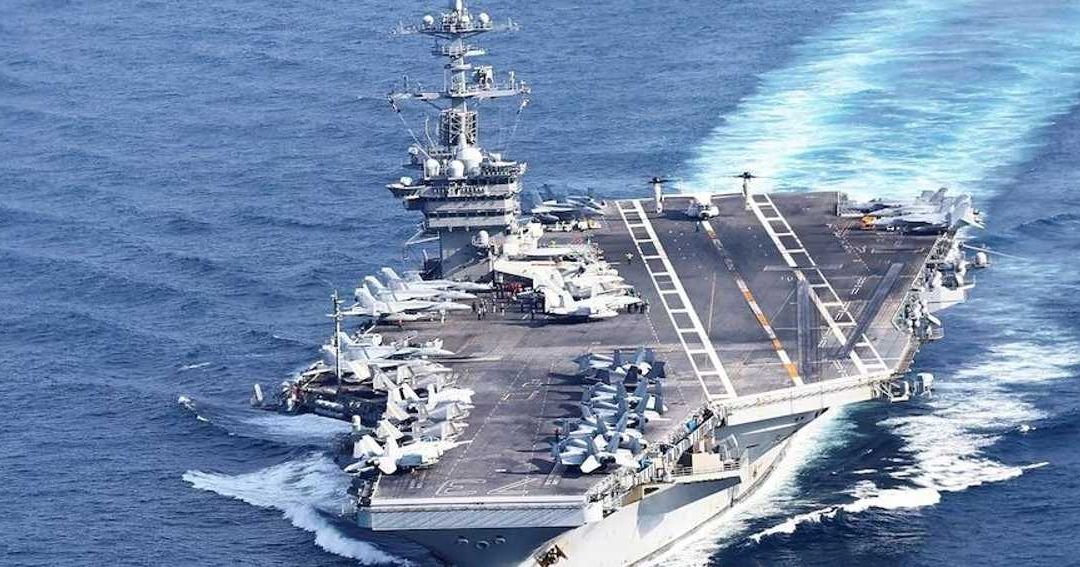
The United States has announced the deployment of the nuclear-powered aircraft carrier USS George Washington to the Middle East. This strategic movement is part of a broader ongoing adjustment of American military assets in the region, aimed at maintaining a continuous naval presence amidst heightened tensions involving Iran and the persistent nature of U.S. military operations in the area.
The deployment follows the conclusion of a rotation schedule that sees the USS George Washington replacing the USS Abraham Lincoln. The shift is designed to ensure that the U.S. maintains a robust capability to project power and respond to regional security challenges as they evolve. The decision underscores the Biden administration’s commitment to reinforcing its military footprint in the Middle East, a move that comes at a time of significant friction between Washington and Tehran, as well as ongoing broader volatility across the Middle Eastern theater.
Military analysts view the presence of a carrier strike group in the region as a critical component of U.S. deterrence strategy. The aircraft carrier serves as a mobile airbase capable of launching a wide array of combat and support missions, ranging from reconnaissance and surveillance to targeted offensive operations. By cycling these assets, the U.S. ensures that its carrier strike groups remain operational and ready for deployment without gaps in coverage, a priority that has remained central to the Pentagon’s operational planning in the Middle East.
The region has experienced a period of protracted military activity, involving various U.S. operations and localized tensions. The arrival of the USS George Washington occurs against this backdrop, signaling a strategic determination to remain engaged in regional security affairs. While the movement is part of a planned rotation, the timing is seen by observers as a message to regional actors regarding the United States’ capacity to maintain a heightened defensive posture.
As the USS George Washington moves into the area of responsibility, it joins other U.S. assets already stationed in the region. The vessel carries a significant complement of air support and advanced defensive systems, providing the U.S. commander with increased flexibility to address contingencies as they arise. The transition from the USS Abraham Lincoln to the USS George Washington will be managed to ensure that there is no disruption to mission readiness. This continuity of presence remains a cornerstone of U.S. foreign policy toward the Middle East, as it seeks to manage the complexities of regional dynamics while safeguarding its strategic interests and those of its key partners.