

What Do Israelis Really Want from the 2026 Election?
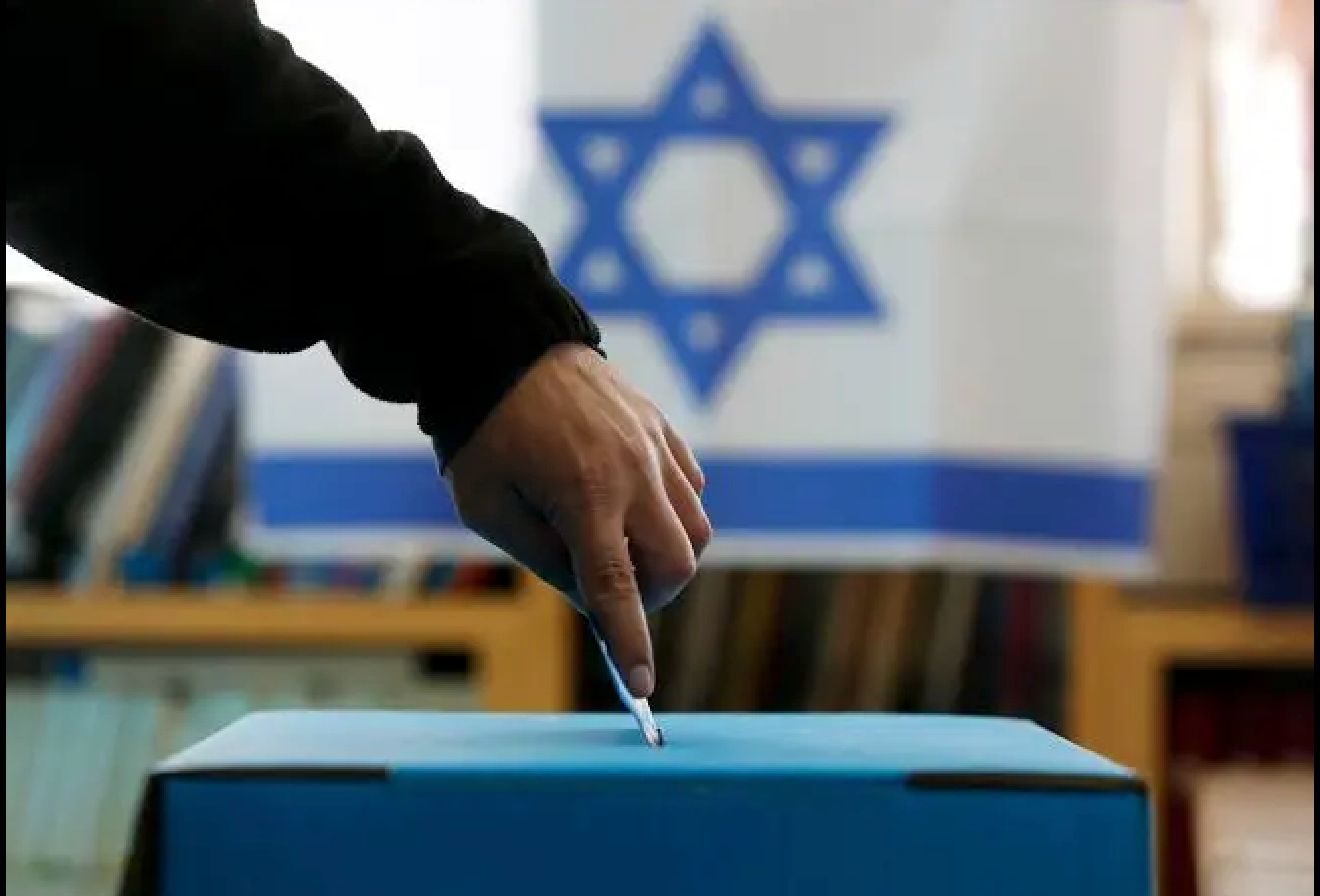
Israel’s 2026 election is increasingly being framed as a contest over who will lead the country next. But beneath the daily polling numbers and political manoeuvring lies another revealing question: what outcome does Israel’s media establishment actually want?
The question is not simply who the Israeli media expects to win. It is what different media organisations appear to prefer, which candidates they treat as credible alternatives, what kind of government they see as desirable, and why.
A review of seven of Israel’s most influential media organisations — Haaretz, Ynet, N12/Channel 12, Maariv, Kan 11, Israel Hayom and The Times of Israel — shows a significant divide.
Much of the mainstream media appears increasingly receptive to a post-Netanyahu government, with former IDF Chief of Staff Gadi Eisenkot emerging as the most credible vehicle for such a change.
The right-wing media, by contrast, remains substantially more favourable to Benjamin Netanyahu and a right-wing government, although even within that camp there is recognition that the political landscape is changing.
The result is an election that may be less about left versus right than about continuity versus change — and, more specifically, whether Israel still needs Netanyahu to provide security and leadership.
THE QUESTION BEHIND THE POLLS
Israel’s political system makes the question of who finishes first only part of the story.
The real question is who can assemble a coalition of at least 61 members of the Knesset.
This distinction is critical.
A party can emerge as the largest party and still fail to form a government. Conversely, Netanyahu could remain politically viable even if Likud does not dominate the polls.
Recent surveys have repeatedly shown a highly competitive race between Likud and Eisenkot’s Yashar, while the wider opposition bloc has at times approached or exceeded the 61-seat threshold.
That has made Eisenkot’s emergence one of the most important developments of the campaign.
He is not simply another opposition politician.
He represents something potentially more consequential: a candidate capable of challenging Netanyahu while speaking the language of Israel’s security establishment.
HAARETZ: THE CLEAREST PREFERENCE FOR CHANGE
Haaretz is the easiest of the major Israeli outlets to place politically.
Its editorial and opinion pages have consistently been highly critical of Netanyahu and the current coalition, particularly its relationship with the far right, the ultra-Orthodox parties and the government’s approach to Israel’s institutions.
Haaretz’s preferred outcome is therefore relatively clear: a change of government.
That does not necessarily mean that Eisenkot represents the newspaper’s ideal ideological candidate. Haaretz’s political centre of gravity is further to the left than Eisenkot.
But Eisenkot offers something strategically important.
He provides a realistic route to defeating Netanyahu without requiring Israeli voters to move substantially to the left.
His military background, centrist positioning and opposition to Netanyahu make him a potentially powerful instrument for political change.
For Haaretz, the attraction is therefore less about Eisenkot as an ideological figure and more about what his rise could mean: the end of the Netanyahu era and the possibility of a fundamentally different governing coalition.
YNET: CHANGE WITHOUT A LEFT-WING REVOLUTION
Ynet occupies a different position.
It is a mass-market news organisation with a much broader audience and a less clearly defined ideological identity than Haaretz.
Its election coverage nevertheless reflects the growing importance of Eisenkot as a serious national alternative.
Ynet has closely followed the opposition’s attempts to challenge Netanyahu, the fragmentation of the political centre and the growing competition between Eisenkot, Bennett and other potential challengers.
The underlying preference appears less ideological than Haaretz’s.
Ynet seems more comfortable with the idea of political change when that change is represented by a mainstream, security-conscious figure.
That is precisely where Eisenkot fits.
He can offer voters the possibility of replacing Netanyahu without suggesting that Israel is abandoning its traditional security priorities.
This may be one of Eisenkot’s greatest political advantages.
He can effectively argue that voters do not have to choose between security and political change.
They can have both.
N12 AND CHANNEL 12: THE MAINSTREAM TEST
If one wants to understand the Israeli political mainstream, Channel 12 is arguably more important than any newspaper.
Its enormous audience gives its polling and political coverage substantial influence.
N12’s election coverage has repeatedly highlighted Eisenkot’s rise, including polling in which Yashar has emerged as the largest party and Eisenkot has led Netanyahu in questions about who is best suited to serve as prime minister.
The significance is not simply that Eisenkot is gaining seats.
It is that the Israeli public is increasingly being presented with a credible alternative to Netanyahu on the question of national leadership.
For years, Netanyahu’s greatest political advantage was his reputation as Israel’s strongest security leader.
Eisenkot directly challenges that advantage.
He is a former IDF chief of staff. He has extensive military experience and carries enormous credibility on security issues.
That makes him fundamentally different from previous Netanyahu challengers.
Channel 12’s apparent preference is therefore best described as a mainstream, security-oriented alternative to the current government.
It is not necessarily a preference for the Israeli left.
It is a preference for a credible alternative.
And at the moment, Eisenkot is the figure who best fits that role.
MAARIV: THE POST-NETANYAHU POSSIBILITY
Maariv’s polling has provided some of the clearest evidence that the political balance may be shifting.
Recent surveys have placed Yashar ahead of Likud in some scenarios and have shown Eisenkot competitive with or ahead of Netanyahu in personal leadership ratings.
But Maariv also highlights the central weakness of the opposition.
There are several potential leaders of the anti-Netanyahu camp.
Eisenkot is competing with Naftali Bennett and other centrist and opposition figures for the same broad pool of voters.
That creates a paradox.
The opposition may collectively have enough support to defeat Netanyahu, but individual parties can divide that support sufficiently to prevent any one bloc from reaching 61 seats.
Maariv’s coverage therefore points toward a post-Netanyahu possibility, but it does not suggest that the path is straightforward.
Eisenkot’s biggest challenge may not be Netanyahu himself.
It may be the fragmentation of the opposition.
KAN 11: LESS ABOUT A CANDIDATE, MORE ABOUT GOVERNABILITY
Kan 11 occupies a somewhat different position because of its public-broadcasting role.
Its coverage tends to focus heavily on polling, coalition mathematics, political institutions and the practical question of whether a government can actually be formed.
Kan’s polling has also shown the increasingly competitive relationship between Likud and Yashar, as well as Eisenkot’s growing position in the preferred-prime-minister question.
But Kan’s coverage is less easily interpreted as a straightforward endorsement of one politician.
Its apparent preference is more institutional.
It is looking for a government capable of functioning and maintaining political stability.
This is important because the current political system has repeatedly struggled with coalition instability.
From that perspective, an election that produces another narrow and fragile coalition may solve very little.
A broad government capable of bringing together different parts of Israeli society would therefore be a more attractive outcome.
Eisenkot’s centrist and security-oriented image makes him potentially compatible with such a government.
ISRAEL HAYOM: THE RIGHT’S COUNTERATTACK
Israel Hayom is the major exception to the broader trend.
Historically associated with the Israeli right and particularly close to Netanyahu, the newspaper remains considerably more receptive to the possibility of another Netanyahu-led government.
Its coverage, however, also reveals how seriously the right is taking Eisenkot.
Rather than dismissing his rise, Israel Hayom has increasingly treated the possibility of an electoral breakthrough as a genuine political threat.
The central concern for the right is therefore not simply whether Netanyahu remains personally popular.
It is whether the right can remain sufficiently consolidated to produce a parliamentary majority.
Smaller right-wing parties face the electoral threshold.
Political mergers can therefore become decisive.
If right-wing voters divide their support among too many parties, Netanyahu could potentially finish strongly but still fail to form a government.
For Israel Hayom, the preferred outcome is therefore clear: a right-wing government, preferably one in which Netanyahu remains the dominant figure.
But the paper’s coverage also demonstrates that the right cannot simply assume that the existing political formula will survive unchanged.
THE TIMES OF ISRAEL: THE ENGLISH-LANGUAGE WINDOW
Among Israel’s English-language media, The Times of Israel provides one of the clearest indications of the argument for political change.
Its reporting includes a wide range of views, but its prominent editorial and opinion writing has been substantially critical of Netanyahu.
Recent commentary has portrayed Eisenkot as a serious alternative to Netanyahu and emphasised the contrast between the two men’s leadership styles and political approaches.
That contrast is important.
Eisenkot represents military professionalism, national-security credentials and political change.
Netanyahu represents continuity, political experience and the established right-wing governing coalition.
For readers of The Times of Israel, particularly international readers trying to understand Israeli politics, Eisenkot is increasingly presented as someone who could provide a credible alternative without abandoning Israel’s security priorities.
That is perhaps the most important point.
The appeal of Eisenkot to much of the mainstream media is not that he represents a dramatic ideological transformation.
It is that he represents change without ideological upheaval.
WHY EISENKOT HAS BECOME SO IMPORTANT
The rise of Eisenkot is not simply a matter of polling.
It reflects a deeper change in the political argument.
For much of Netanyahu’s career, one of his strongest claims has been that there is no credible alternative capable of protecting Israel.
Eisenkot challenges that claim directly.
He is not an outsider to the security establishment.
He is a former chief of staff of the IDF.
He therefore does not need to convince voters that he understands military strategy, national security or the realities of Israel’s wars.
This creates an unusual political proposition.
An Israeli voter can theoretically support a change of government without believing that they are taking a risk on national security.
That is potentially much more powerful than a conventional centre-left campaign.
THE THREE OUTCOMES THE MEDIA IS REALLY WATCHING
There are essentially three scenarios emerging from the Israeli media landscape.
The first is an Eisenkot breakthrough.
Yashar becomes the largest party, the opposition reaches at least 61 seats, and Eisenkot forms a broad centrist and security-oriented coalition.
This is the outcome most compatible with the preferences visible in much of the mainstream media.
The second is a Netanyahu recovery.
Likud consolidates the right, smaller parties survive or merge successfully, and Netanyahu manages to assemble a coalition of 61 or more.
This remains entirely possible and is the outcome most compatible with the preferences of Israel’s right-wing media.
The third possibility may be the most interesting.
Neither bloc reaches 61 seats.
In that situation, the election could produce another prolonged period of coalition negotiations.
Bennett, Eisenkot, Liberman, the ultra-Orthodox parties and smaller political forces could all become decisive.
The person who wins the most seats would not necessarily be the person who becomes prime minister.
WHAT DOES ISRAEL’S MEDIA ACTUALLY WANT?
When the seven media organisations are viewed together, a broad pattern emerges.
Haaretz clearly favours political change.
Ynet appears receptive to a mainstream alternative to Netanyahu.
Channel 12 increasingly treats Eisenkot as a credible national leader.
Maariv’s polling reflects growing interest in a post-Netanyahu government.
Kan focuses more on governability and institutional stability than on a particular political personality.
Israel Hayom remains the clearest major media supporter of a right-wing government and Netanyahu’s continued leadership.
The Times of Israel provides the strongest English-language editorial environment for the argument that Israel should move beyond Netanyahu.
The result is not a unanimous media endorsement of Eisenkot.
It is something more subtle.
Much of Israel’s mainstream media appears to have become comfortable with the idea that Netanyahu can and perhaps should be replaced — provided that the alternative is strong enough on security.
THE REAL ELECTION QUESTION
The 2026 election may therefore not ultimately be a simple contest between left and right.
It may be a referendum on something more fundamental:
Does Israel want continuity with Netanyahu, or does it believe that the country can have security without Netanyahu?
That is why Eisenkot’s rise matters.
If he can convince voters that political change does not mean weakening Israel, he could break the central psychological advantage that Netanyahu has maintained for years.
But if the opposition remains divided, Netanyahu does not need to win the political argument outright.
He only needs to assemble 61 seats.
And that is why the election remains genuinely unpredictable.
THE BOTTOM LINE
The Israeli media landscape currently points in two different directions.
The mainstream and centre-oriented media increasingly appear interested in a broad, security-focused government beyond Netanyahu, with Eisenkot emerging as the most credible vehicle for that change.
The right-wing media continues to favour Netanyahu and a right-wing coalition, while increasingly recognising that the old political formula is under pressure.
The most important question is therefore no longer simply who will win the largest number of seats.
It is who can transform electoral support into 61 Knesset seats.
And that leaves Israel facing a fascinating political possibility:
The 2026 election could produce a new political leader not because Israel has moved sharply to the left, but because a former military chief has persuaded enough voters that they can choose change without sacrificing security.