Turkish FM Defends Maritime Agreement with Libya
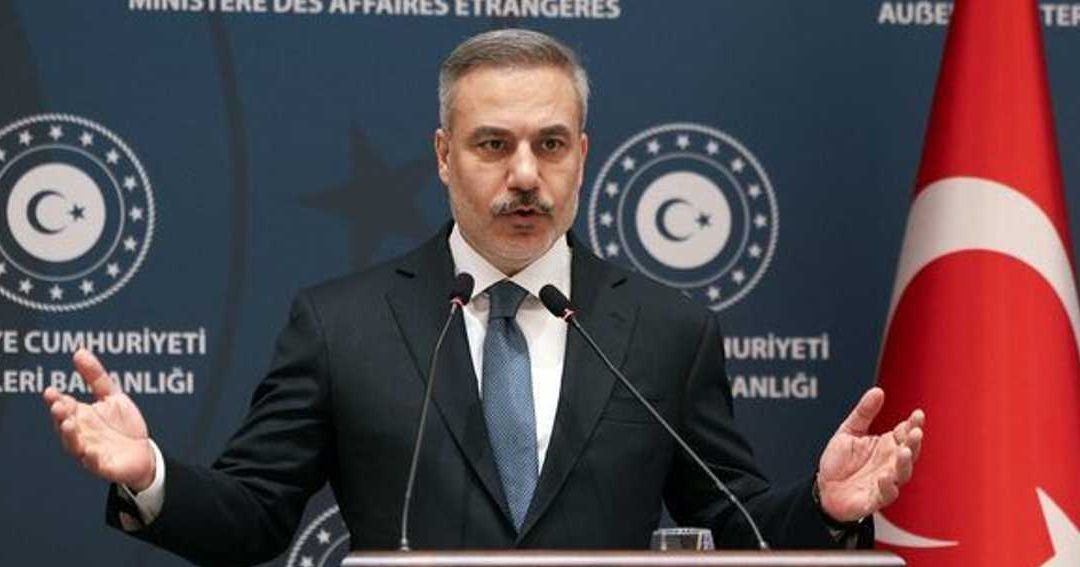
Turkish Foreign Minister Hakan Fidan has issued a firm defense regarding the maritime memorandum of understanding signed between Ankara and Libya, asserting that the agreement is entirely legitimate despite ongoing international criticism. Speaking on Wednesday, Fidan addressed the objections raised by several nations, stating that Turkey is fully aware of the motivations behind the resistance to the pact.
The maritime agreement has been a focal point of Mediterranean geopolitics since its inception, defining exclusive economic zones and establishing boundaries that have drawn scrutiny from various regional and international stakeholders. While certain nations have challenged the validity of the accord, Ankara has consistently maintained that the document conforms to international legal standards and serves the strategic interests of both Turkey and Libya.
During his remarks, Fidan emphasized that Turkey’s commitment to the agreement remains steadfast. He noted that the objections raised by opposing parties are not unexpected and that Ankara understands the underlying reasons for this diplomatic friction. By characterizing the deal as a legitimate exercise of sovereignty and international cooperation, the Turkish government continues to position the memorandum as a cornerstone of its maritime policy in the region.
The diplomatic exchange underscores the complexities inherent in Eastern Mediterranean maritime claims, where overlapping zones and resource interests frequently lead to friction between regional powers. Ankara’s decision to reiterate its stance signals a determination to uphold the terms of the memorandum, irrespective of the external pressure being exerted by other countries who view the deal as an infringement upon their own maritime jurisdiction.
As the situation evolves, the focus remains on the interpretation of maritime borders and the legal frameworks governing access to potential resources within the Mediterranean. For Turkey, the agreement with Libya serves as a vital instrument for securing its maritime footprint. Fidan’s comments serve as a clear message to international observers that Turkey intends to navigate the resulting diplomatic tensions while adhering to the provisions established in the maritime accord.
The ongoing dialogue surrounding this issue reflects the broader strategic competition currently playing out across the Mediterranean, where diplomatic maneuvers and bilateral agreements significantly influence the balance of power. Ankara’s firm rhetoric suggests that it does not intend to compromise on the maritime boundaries defined by the agreement, maintaining that its actions are aligned with both its national security priorities and its interpretation of regional legal norms. The international community continues to watch these developments closely, as the stability of maritime relations remains a critical factor for the geopolitical landscape of the entire region.